The Aral Apocalypse
Abstract & Research Methodology
“What struck me most was how a single policy decision rippled across generations—economically, ecologically, and emotionally. This project taught me to connect data to lived experiences, and it deepened my commitment to applying analysis not just to problems, but to real-world outcomes.”
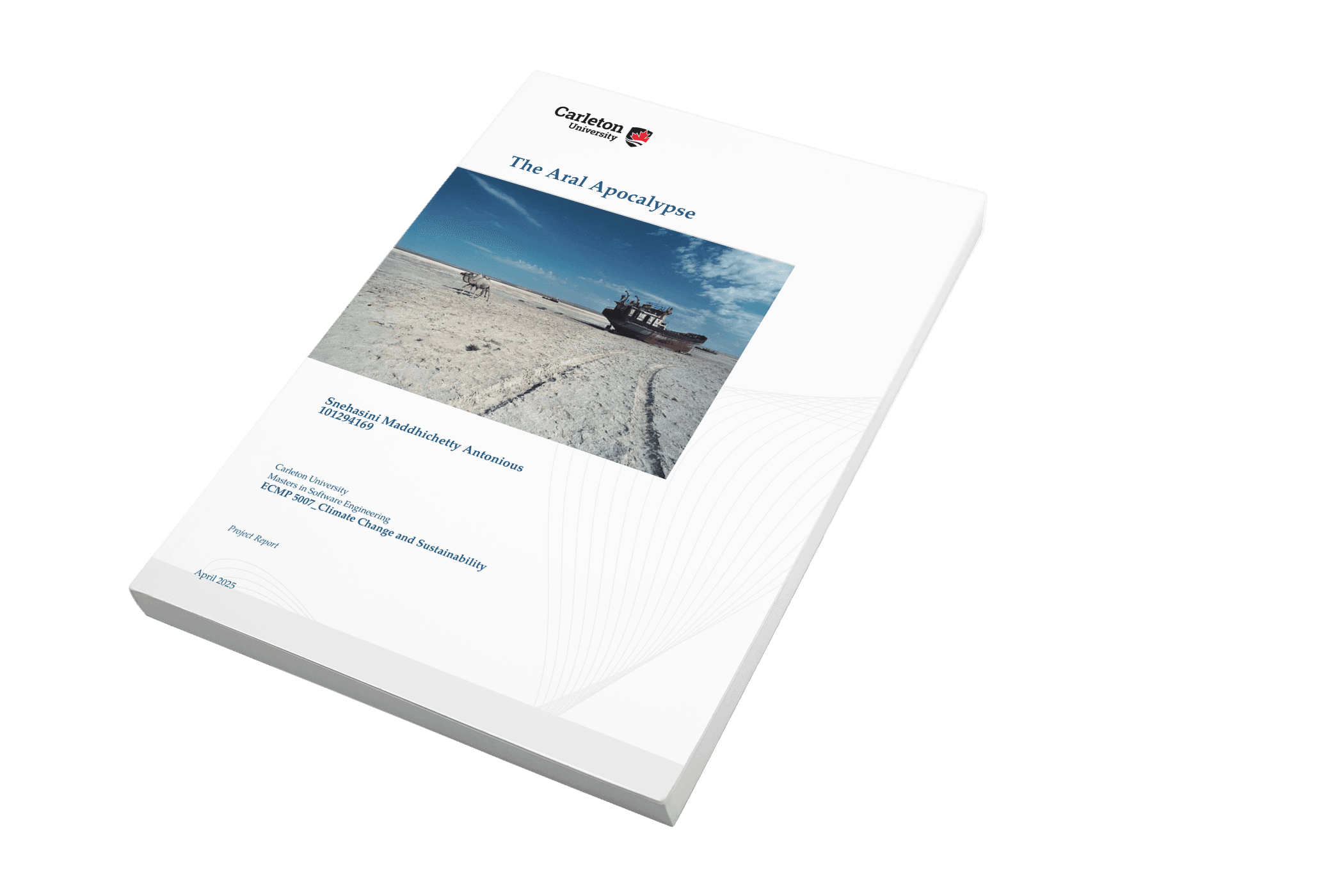
A Cautionary Tale of Water Mismanagement
🌍 Project Context
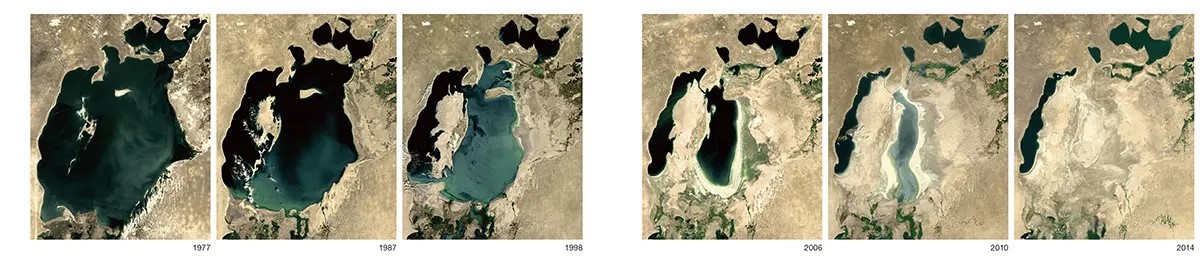
Once the world’s fourth-largest inland water body, the Aral Sea experienced a dramatic collapse due to unsustainable water management during the Soviet era. This ecological and humanitarian crisis unfolded over decades, displacing communities, collapsing ecosystems, and accelerating regional climate instability. My research explored the causal mechanisms, human impacts, and policy failures behind this disaster—and used it as a lens to analyze global patterns in water mismanagement.
🔍 Research Objectives
— Investigate the socio-environmental consequences of the Aral Sea collapse
— Analyze historic and modern irrigation policies for systemic inefficiencies
— Identify globally applicable insights and scalable recovery frameworks
🧭 Methodology & Analytical Process
📡 Data-Driven Environmental Analysis
— Hydrological Tracking: Mapped lake shrinkage using multi-year satellite imagery and GIS data.
— Climate Impact Assessment: Analyzed climate records and soil salinization trends to uncover feedback loops in desertification and microclimate disruption.
— Infrastructure Evaluation: Reviewed Soviet-era irrigation blueprints and reports to quantify water loss (up to 60%) and inefficiencies in canal systems.
👥 Human-Centered Impact Mapping
— Socioeconomic Data Review: Assessed displacement, unemployment, and livelihood loss using reports from UNDP, WHO, and the World Bank.
— Public Health Analysis: Linked respiratory illnesses, birth defects, and mental health issues to toxic dust storms through case data from Moynaq and surrounding regions.
— Migration & Livelihood Trends: Correlated employment and migration patterns with geographic water regression and agricultural decline.
🌐 Comparative Case Studies
To contextualize findings and enhance global relevance, I compared the Aral Sea crisis with other declining water systems:
Lake Urmia (Iran)
Colorado River Basin (USA)
Lake Chad (Africa)
The Great Lakes(USA and Canada)
Each comparison emphasized how poor governance, climate inaction, and unsustainable agriculture can converge into large-scale humanitarian and ecological emergencies.
📊 Key Insights & Strategic Recommendations
— Climate-Smart Agriculture: Advocated transition from monocultures to regional climate-adaptive, sustainable crops.
— Irrigation Modernization: Proposed replacement of inefficient open canals with drip and precision irrigation technologies.
— Adaptive Water Governance: Recommended a real-time, data-integrated management model prioritizing equity, conservation, and resilience.
— Scalable Recovery Models: Analyzed the Kok-Aral Dam’s success in reviving parts of the North Aral Sea to propose frameworks for targeted intervention in other at-risk basins.
— This project synthesized 50+ cross-disciplinary sources and employed a systems-thinking approach to diagnose a complex environmental crisis.
— It demonstrates my ability to connect historical data, scientific models, and policy frameworks into actionable, insight-rich deliverables—skills I aim to bring into roles focused on strategy, sustainability, or research-driven consulting.




Links.
© 2025 • Snehasini M Antonious